
Table of Contents
- What Is Sheet Metal Fabrication?
- Why Is It Important?
- Types & Variants: Sheet Metal Fabrication Techniques
- Features to Look For in a Fabrication Partner
- Product Overview
- Benefits of Sheet Metal Fabrication
- Applications & Use Cases
- Sheet Metal Fabrication at a Glance
- Expert Tips / Buying Guide
- About Integrated Solutions
- Conclusion
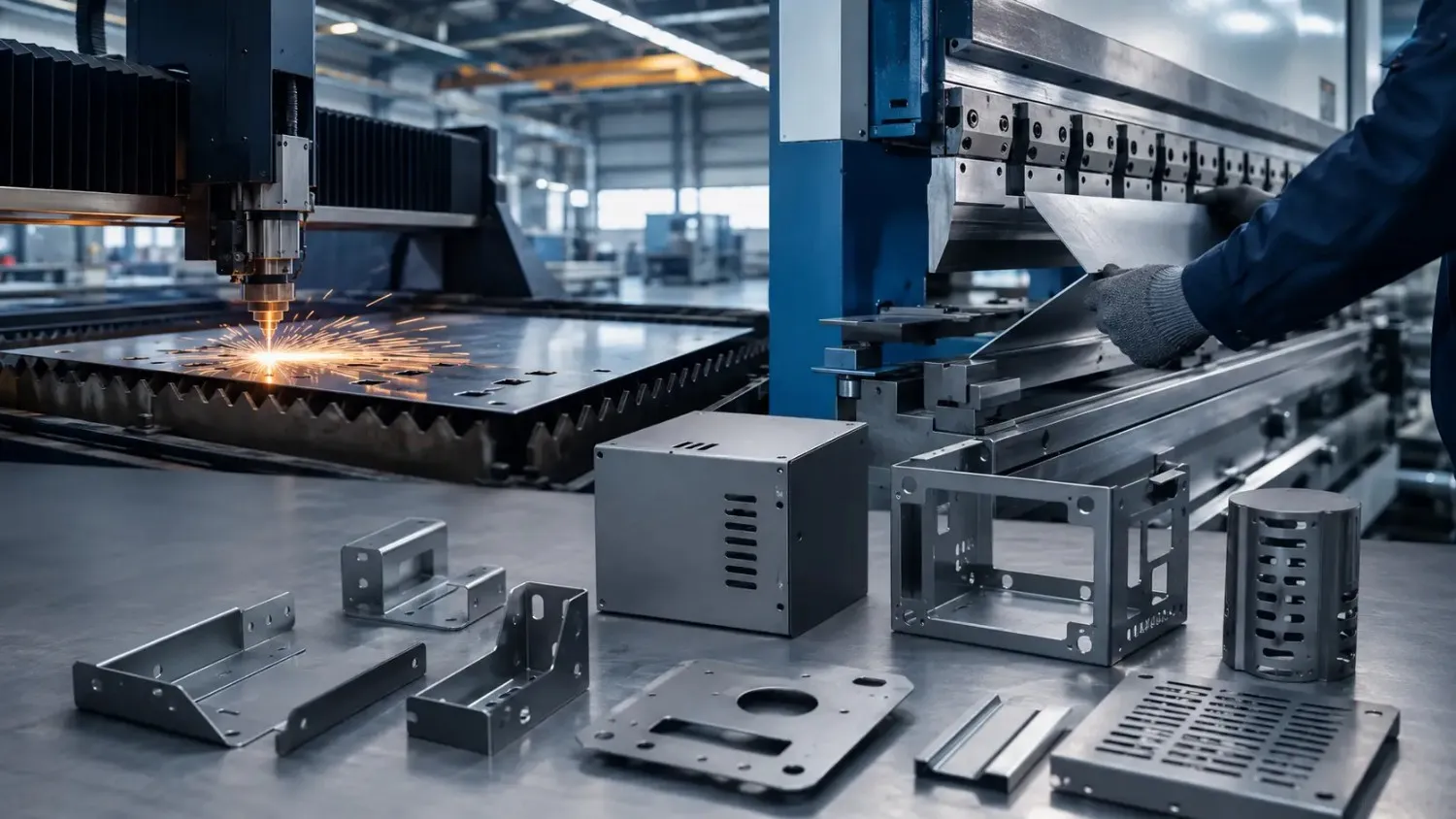
Walk into almost any factory and you'll spot sheet metal fabrication somewhere in the mix a bracket holding up a control panel, a bent chassis under a machine, a cabinet housing a server rack. It isn't glamorous work, but it's everywhere. At its core, Sheet Metal Fabrication takes flat stock and turns it into parts that actually do something: carry load, protect components, bolt into an assembly line without a fight. This piece walks through what the process really involves, the techniques behind it, and where it turns up in day-to-day production useful whether you're specifying a part for the first time or just trying to make sense of what a supplier means by Sheet Metal Manufacturing.
What Is Sheet Metal Fabrication?
Strip away the sales language and Sheet Metal Fabrication isn't that hard to explain. You start with a flat sheet somewhere between 0.15 mm and 6.35 mm thick, depending on the job then cut it, bend it, and join it until it turns into a part that actually does something. No melting anywhere in the process; that's what casting is for. This is closer to old-fashioned Sheet Metal Work, where metal gets shaped through force, heat-assisted cutting, or plain pressure instead of being poured into a mould.
Starting from a flat blank gives you room to play holes, slots, ribs, bend lines, whatever the design calls for. That freedom is really the whole point behind Custom Metal Fabrication. Hand over a CAD file with the right numbers on it, and most shapes a designer can sketch will come out right on the shop floor.
Why Is It Important?
Get this stage wrong and everything downstream feels it assembly delays, parts that don't sit flush, warranty complaints months later. That's the unglamorous but true reason it matters so much.
- Handles small prototype runs and large batches without switching methods
- Cuts down on wasted material through smarter sheet layout
- Produces parts that are strong without being heavy
- Keeps tolerances consistent once CNC equipment is in the loop
- Lets you tweak a design without paying for new tooling every time
- Usually faster than waiting on a casting or forging cycle
Work with a Sheet Metal Fabrication Company that actually holds its tolerances batch after batch, and a lot of these headaches simply don't come up.
Types & Variants: Sheet Metal Fabrication Techniques
Sheet Metal Fabrication Techniques aren't really one process. They're a handful of steps, usually run in sequence, each one handing off to the next.
1. Cutting
- Laser cutting, for anything with tight detail
- Waterjet, when heat would ruin the material
- Plasma, for the thicker stock
- Shearing, for plain straight cuts nothing fancy needed
2. Forming & Bending
- Press brake work for angles and U-folds
- Roll forming, for long continuous profiles
- Deep drawing, once the shape gets genuinely three-dimensional
3. Joining & Assembly
- Welding — MIG, TIG, or spot, depending on the joint
- Riveting, if something might need to come apart later
- Screws, clips, and other mechanical fasteners
4. Finishing
- Powder coat, for a tough, even finish
- Anodizing, mostly on aluminium
- Paint or bead blasting, depending on the look needed
Line all of that up and you've got the full Sheet Metal Fabrication Process — cut, bend, join, finish. Skip a step, or rush one, and it usually shows.
|
DID YOU KNOW? A single bracket can pass through four separate machines—cutter, brake, welder, finishing line—before anyone calls it "done." |
Features to Look For in a Fabrication Partner
Before signing off on a Metal Fabrication Services provider, it's worth checking a few things rather than just comparing quotes.
- CNC-controlled cutting and bending, not manual guesswork
- Comfort working across stainless steel, aluminium, mild steel, copper, and brass
- Welding and finishing handled in-house, not farmed out
- Tolerances tight enough for the job — typically ±0.1 mm to ±0.3 mm
- Room to grow from a five-piece prototype to a five-thousand-piece order
- Someone willing to show inspection records, not just mention them
Product Overview
Most Sheet Metal Components you'll run into fall into a handful of familiar shapes enclosures, brackets, panels, chassis, ducting, structural frames. What material gets picked usually says something about what the part has to survive: weather, vibration, a food-grade environment, whatever applies. A Sheet Metal Fabrication Company worth its name doesn't hand off half the job to someone else. It sources the sheet, runs it through cutting and forming, welds whatever needs joining, then finishes it — so what shows up at your dock is basically ready to bolt in.
|
TRIVIA "Fabrication" traces back to the Latin fabricare — to make. Not a glamorous origin story, but it fits an industry built entirely around shaping raw material into something useful. |
Benefits of Sheet Metal Fabrication
Here are the benefits of sheet metal fabrication:
- Good strength without excess weight
- Doesn't get dramatically pricier at scale
- Handles complicated shapes without much fuss
- Resists corrosion reasonably well once finished properly
- Lasts a long time with barely any upkeep
- Scrap gets recycled instead of thrown away
|
FACT Recycled steel doesn't really lose strength in the process — one reason sheet metal keeps coming up in sustainable-manufacturing conversations. |
Applications & Use Cases
Sheet Metal Parts Manufacturing shows up in more places than most people expect.
- Automotive — panels, brackets, fuel tanks
- Electronics — server racks, enclosures, cabinets
- Construction — cladding, roofing, ducting
- Industrial gear — frames, machine housings
- Everyday products — kitchenware, appliance shells, storage units
A good chunk of that demand lands with Sheet Metal Fabricators in India — the skilled labour is there, and so are supply chains that already know how to move both local and export orders without much friction.
Sheet Metal Fabrication at a Glance
Here are the stages of sheel metal fabrication for better understanding:
| Stage | What It Involves | Why It Matters |
|---|---|---|
| Cutting | Shaping the flat sheet into the right size and outline | Sets the foundation everything else builds on |
| Bending | Folding the metal into angles, curves, or profiles | Gives the flat sheet its physical form |
| Joining | Welding, riveting, or fastening pieces together | Turns separate pieces into one solid assembly |
| Finishing | Coating, painting, or polishing the surface | Adds protection and improves how the part looks |
Expert Tips/Buying Guide
A few things worth sorting out before an order actually goes in.
- Send a proper CAD file — dimensions, tolerances, all of it
- Pick material based on what it'll actually face: corrosion, heat, load
- Keep wall thickness even, or warping becomes a headache
- Get the bend radius right, or cracks show up down the line
- Ask what testing happens before the part ships out
- Check the supplier has actually made something like this before, not just adjacent to it
An experienced Sheet Metal Fabrication Services partner tends to need fewer rounds of "can we change this" before a part is right — which saves everyone time.
About Integrated Solutions
Integrated Solutions is a renowned company in India that deals in engineering and manufacturing of CNC machining, EDM solutions, rapid prototyping, tools design and other precision manufacturing services with 20+ years of experience. Integrated Solutions was established in 2004 by Mr. Rahul Chandel (Founder & CEO). Currently, Integrated Solutions is recognized as a leading manufacturer and supplier of advanced engineering solutions for applications within aerospace, automotive and other medical manufacturers. This is achieved through the combination of innovative technology and engineering skills to provide superior and cost-effective solutions globally.
Conclusion
Sheet metal fabrication isn't flashy, but it's hard to overstate how much of modern manufacturing runs through it. Every enclosure, bracket, and panel that fits right the first time is really the result of someone getting the cutting, bending, and finishing steps right, in that order, without cutting corners. Find a Sheet Metal Fabrication Company that treats those steps seriously, and the rest of a project tends to go a lot smoother — whether that's one prototype or ten thousand units.
| Have a part in mind? Reach out to the Integrated Solution team and get the best product. Contact Us Now! |