
Table of Contents
- What Are CNC and VMC Components?
- Why Tight Tolerances Matter
- Types and Variants
- Features to Look For
- Product Overview
- Benefits
- Applications and Use Cases
- Factors That Influence Component Quality
- A Few Things Worth Checking Before You Buy
- About Integrated Solutions
- Conclusion
A production line rarely stops because of one big mistake. Usually it's something small — a bracket that's a fraction off, a bore that's slightly wide — and the whole assembly grinds to a halt over it. That's really the point of CNC and VMC Components: computer-guided cutting instead of a machinist working by feel. Run the same program a hundred times and the part comes out the same way every single time, not roughly the same. A lot of buyers now go straight to CNC Components Manufacturers in India because of this; the accuracy holds and the cost stays reasonable. Below is a rundown of what these parts actually are, why tolerance gets so much attention in this field, and a few things worth checking before picking a vendor.
What Are CNC and VMC Components?
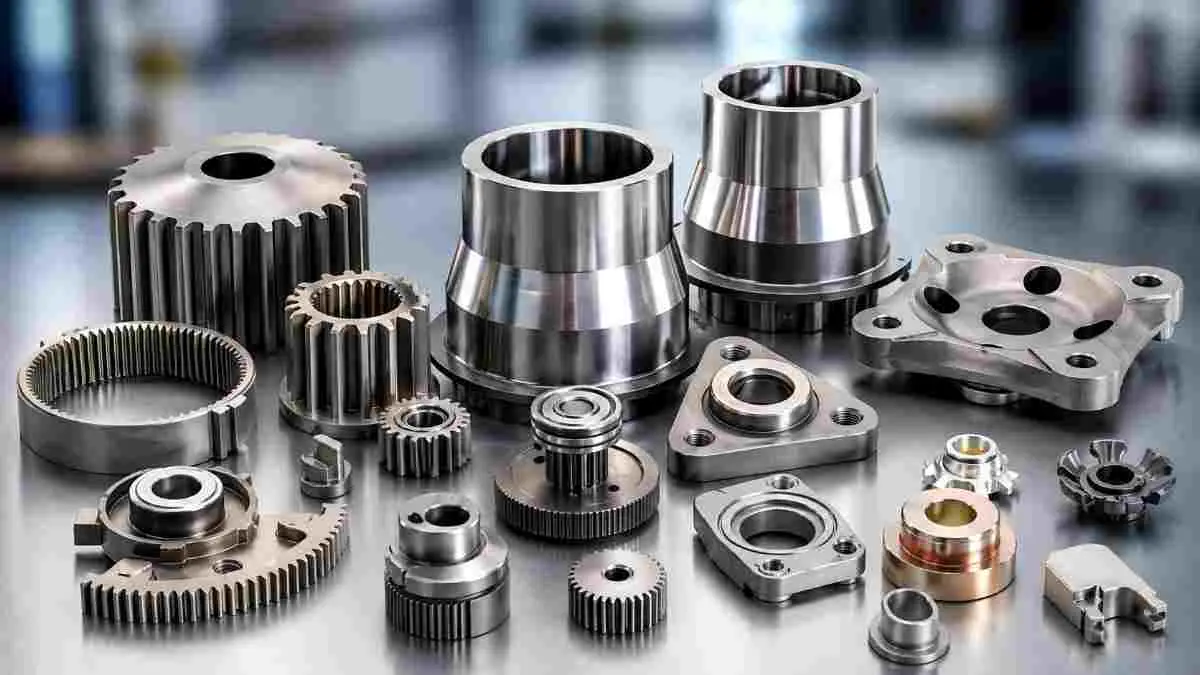
CNC, or Computer Numerical Control, runs on code — someone writes the program, the machine follows it, cut after cut, with no room for a tired hand or a bad day. A VMC is one flavour of that: a Vertical Machining Center, spindle pointing straight down, built for milling, drilling, tapping — anything that needs a flat or block-shaped part done right. Put the two together and you get what most engineers just call CNC Machined Components. Doesn't matter if it's a tiny bracket or a housing with six different faces to machine; the CAD file becomes a physical part with barely any wiggle room. The machine reads G-code line by line and moves exactly where it's told. First piece, thousandth piece — same geometry, no drift.
Why Tight Tolerances Matter
Tolerance, in plain terms, is how far off a part is allowed to be from what the drawing says. And CNC Machining Tolerances can get tight — ±0.005 mm tight, which is nothing you'd catch with a bare eye. But skip that precision and things start to go wrong fast: parts jam, they vibrate, they wear out before they should. In aerospace or medical work, that margin isn't optional — a barely-there deviation can be the difference between safe and not. This is exactly why “Precision Machined Components” has become its own search term rather than just a description. People aren't asking for machined parts anymore. They're asking for parts that hold their number every single time.
- Fewer rejections on the assembly line, less rework
- Batches that actually interchange with each other
- Moving assemblies that last longer before they wear out
- Fewer warranty claims once the part is out in the field
Types and Variants
Not every part needs the same machine, and honestly, picking the wrong one wastes both time and money. It comes down to shape, material, and how fine the finish needs to be.
- 3-Axis VMC Machined Components — good for flat or mildly contoured shapes
- 4 and 5-Axis setups when the geometry gets genuinely complicated
- CNC Components turned on a lathe, mostly for round or cylindrical parts
- Small prototype runs, just to validate a design before committing
- Full production volumes for automotive lines and consumer products
Trivia: The engineering idea of “tolerance” actually predates CNC by over a century — it goes back to 19th-century interchangeable-parts manufacturing.
Features to Look For
Before you sign off on a vendor, there are a few things worth checking — not just asking about.
- Does the tolerance range they quote actually match your part, or is it a generic number?
- Surface finish — usually given in Ra micrometres, and it matters more than people think
- Traceability on the material, with certificates to back it up
- Repeatability across batches, not just one good sample
- In-house inspection: calipers, CMMs, optical comparators — something beyond a visual check
Did You Know? Some VMC spindles run past 20,000 RPM — quick enough to knock out a fairly complex part before your coffee gets cold.
Product Overview
A decent supplier of Precision CNC Components works across more materials than you'd expect — mild steel, stainless, alloy steel, aluminium, brass — all run through multi-axis centres with spindles that can hit 30,000 RPM. Automatic tool changers, ball screws on servo drives, linear guideways — none of it's flashy, but together it keeps the cycle time down without letting accuracy slip. That's really what separates a shop that can go from one prototype to a full batch of VMC Components without stopping to retool everything. Surface finish gets tailored too — a fine 0.8 µm Ra where the fit is tight, or 12.5 µm Ra for a bracket where nobody's going to notice a slightly rougher surface.
Benefits
It's not just about hitting a number on a drawing, either.
- Quality that doesn't drift, part 1 to part 10,000
- Turnaround that beats manual machining by a wide margin
- Less material wasted, because the cutting path is calculated, not guessed
- Room to move between a five-piece prototype run and a five-thousand-piece order
- Less downtime, since the tool changer handles what a person used to do by hand
Fact: ±0.005 mm is about a tenth the width of a strand of hair. Small, but it's the difference between a part fitting and not.
Applications and Use Cases
These aren't shelf parts. They go straight into machines that run under load, heat, or both.
- Engine and transmission components in automotive
- Aerospace brackets and structural fittings
- Housings for medical devices, plus surgical instrument parts
- Connector bodies and enclosures in electronics
- Spindles, fixtures, and tool holders on the factory floor itself
Factors That Influence Component Quality
Here are the factors that influence component quality:
| Factor | Why It Matters |
|---|---|
| Tolerance Range | Determines how precisely a part fits and functions within an assembly |
| Surface Finish | Rougher surfaces wear faster and can leak at a seal; a finer Ra usually costs more but lasts longer |
| Material Choice | Steel handles load, aluminium saves weight, brass resists corrosion — pick based on what the part has to survive |
| Axis Configuration | Higher axis counts allow more complex geometries in a single setup |
| Batch Consistency | Ensures every part in a production run performs identically |
| Inspection Method | Confirms dimensional accuracy before parts leave the facility |
A Few Things Worth Checking Before You Buy
None of this takes long, honestly. Skipping it usually does.
- Get a sample part first. Don't commit to a full run blind.
- Ask if they handle both prototyping and bulk — not every shop does both well
- Look past the price quote at their quality documentation
- Ask about lead time separately for domestic orders and export shipments
- Talk through material alternatives early, before it affects your cost or your delivery date
If you're buying from outside India, established CNC and VMC Components Exporters in India tend to strike a fair balance — good pricing without cutting corners on machining quality, and a team that already understands what overseas documentation requires. Worth asking, too, whether a supplier covers full CNC and VMC Component Services in India — design input all the way through to packaging and dispatch, not just the machining step.
About Integrated Solutions
Integrated Solutions is a renowned company in India that deals in engineering and manufacturing of CNC machining, EDM solutions, rapid prototyping, tools design and other precision manufacturing services with 20+ years of experience. Integrated Solutions was established in 2004 by Mr. Rahul Chandel (Founder & CEO). Currently, Integrated Solutions is recognized as a leading manufacturer and supplier of advanced engineering solutions for applications within aerospace, automotive and other medical manufacturers. This is achieved through the combination of innovative technology and engineering skills to provide superior and cost-effective solutions globally.
Conclusion
At the end of the day, good machining isn't about the equipment on the shop floor. It's about hitting the same tolerance, order after order, without a surprise showing up at final inspection. Integrated Solutions has built its name as a CNC and VMC Components Manufacturer in India on exactly that — multi-axis machining, tolerance control that's actually verified, and support from the CAD stage right through to the final check, for anyone who needs dependable CNC and VMC Components in India. Two decades in, the CNC and VMC Components coming out of their facility still reflect the same thing: parts built to spec, not close to it. For a team comparing vendors, that consistency usually counts for more than whatever's on the quote sheet.
| Reach out to Integrated Solutions to talk through your machining requirements and get a quote built around your part, not a template. Contact Us Now! |