
Table of Contents
- Why Choosing the Right CNC Precision Components Matters
- 7 Factors to Consider When Choosing CNC Precision Components
- Industrial Applications of CNC Precision Components
- How to Select a Reliable CNC Precision Components Manufacturer in India
- Conclusion – Choose the Appropriate CNC Parts for You
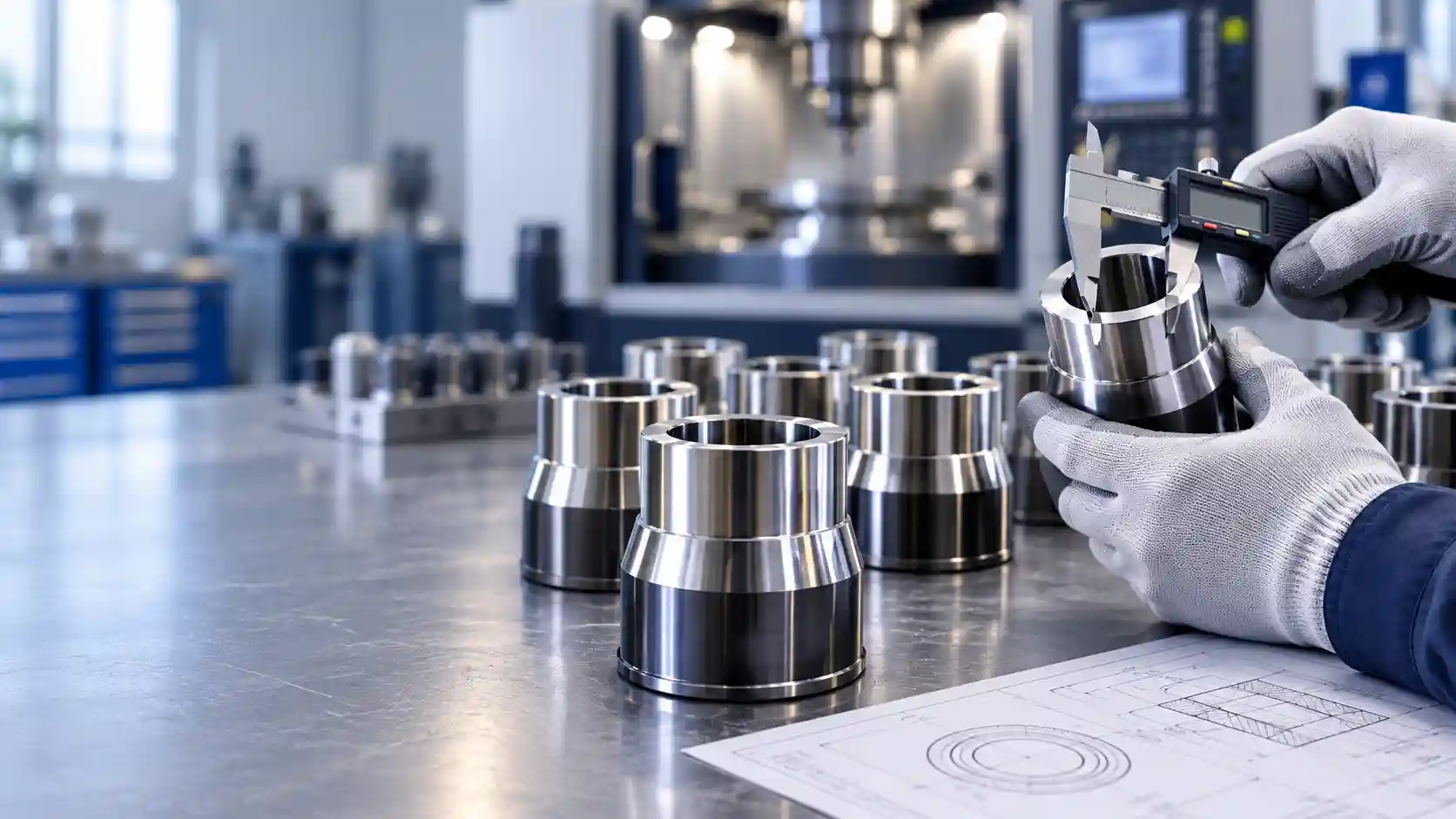
Think about a machine on your shop floor. It’s made of hundreds of parts, and most of them are small. But if one shaft is a little off, the whole thing starts to shake, run hot or wear out early. That’s why picking good CNC precision components isn’t a small decision. Most buyers worry about the same things. Is the material right? Will the sizes stay correct? We’ll go through each one in simple words, with help from Integrated Solutions, so your CNC machined components fit the first time.
Trivia: “The first numerically controlled milling machine was shown at MIT in 1952. It read its instructions from punched paper tape. Today’s machines follow computer programs, but the basic idea hasn’t changed.”
Why Choosing the Right CNC Precision Components Matters
Precision is a bit like insurance. You spend a little care now so you don’t spend a lot later. Poor machining often shows up only at assembly, when it’s hardest to fix. So what actually goes wrong with precision CNC machined parts?
- Wrong size: A part just 0.05 mm off can stop an assembly from closing, or leave it loose.
- Poor fit: Shafts, bushes and housings should slide together without force and without wobble.
- No repeatability: Part 1 and part 1,000 should behave the same, but sometimes they don’t.
- Weak performance: A rough surface or a wrong size adds heat, noise and vibration to industrial CNC components.
- Rework and delays: Lines stop, and somebody has to explain why.
- One drawing mistake repeated across hundreds of pieces. That’s the expensive one.
7 Factors to Consider When Choosing CNC Precision Components
Seven things decide whether a purchase of CNC precision parts goes well or badly. None of them is hard. Just don’t skip any. Keep your drawing next to you while you read.
1. Material Selection and Industrial Compatibility
Consider the choice of materials first, then consider the cost. For CNC metal components, consider the weight load of the part and its environment. A quick guide:
- Steel: Strong and tough. Good for shafts and gears.
- Stainless steel: Doesn’t rust easily. Better for wet places or contact with chemicals.
- Aluminium: Light, and easy to cut. Weight matters? Start here.
- Brass: Runs smooth, resists corrosion. Often used for fittings and bushes.
2. Dimensional Accuracy and Tolerance Requirements
Tolerance simply means how much error is allowed on a size. For High Precision CNC Components, a tighter number is not always better. It costs more to make and more to check. Before you fix the numbers, find out:
- Does the drawing mark the critical sizes clearly?
- What kind of fit do you need: loose, snug or press fit?
- Who checks the key dimensions, and with what tool?
- Can tight tolerance machining be kept for the features that truly need it, like a bearing seat?
3. Surface Finish and Component Quality
Finishing isn’t only about looks. A rough hole can wear out a seal in a few days. So look at these things on precision CNC parts:
- Surface roughness, written as Ra, on faces that touch or seal.
- Tool marks in places where they shouldn’t be.
- Deburring: Sharp edges cut hands and damage seals.
- Coating, plating or polishing, if the job needs it.
- The same finish on every piece, not only the first.
4. Manufacturing Technology and Machining Capabilities
Different shapes need different machines. When you talk to a CNC Precision Components Manufacturer, ask which CNC machining services they run in their own shop.
- CNC turning: Round parts like shafts, pins and bushes.
- CNC milling: Flat faces, slots, pockets and housings.
- Multi-axis machines: Tricky shapes in fewer setups, so fewer chances for error.
- A shop with only one type of machine may bend your design to suit it.
5. Quality Inspection and Testing Procedures
A good part is one you can prove is good. Precision machined components need paperwork behind them, so CNC component quality inspection should be part of every order. Look for:
- Calibrated measuring tools
- The right tool for the tolerance: Vernier, micrometer, gauge, or a CMM (a machine that measures with a touch probe)
- An inspection report with each batch
- First-piece approval before the full run
- Batch consistency. Is the last piece like the first?
6. Customisation and Production Volume
Most Custom CNC Machined Components start from your drawing. Tell the supplier the quantity early, even a rough number, so they can plan material and machine time. Common routes:
- Prototype first, approve, then scale up
- A small trial batch to see how parts fit in the real assembly.
- A bulk CNC machined parts supplier for steady monthly orders.
- Repeat orders on the same drawing revision, so nothing changes by surprise.
- Minimum order quantity. Ask before you assume.
Did You Know?: “A human hair is about 70 microns thick. Some CNC parts are made to within ±10 microns, a lot finer than that. No wonder measuring tools matter as much as the machines.”
7. Supplier Reliability and Delivery Capability
A perfect part that comes late still stops your line. So judge any CNC precision components manufacturer in India on delivery, not only on machining. Check:
- Lead time, written down
- A production plan for your batch size.
- Good questions about your drawing. If they ask none, worry.
- A quote that lists material, finish and inspection, not just a price.
- Straight answers about delays. A CNC parts supplier who goes quiet is a red flag.
Industrial Applications of CNC Precision Components
You’ll find CNC parts inside more machines than you’d guess. Here’s where they commonly show up, without any big promises:
- Automotive machinery: Shafts, couplings, brackets, spacers and housings that hold alignment while the vehicle vibrates.
- Industrial equipment: Gears, bushes, flanges and fixtures used in pumps, presses and conveyors.
- CNC machined parts for aerospace: Light, close-fitting parts made to the buyer’s own drawings and specifications.
- CNC machined parts for electronics: Heat sinks, enclosures, connector bodies, mounting plates.
- General engineering: Jigs, tooling plates and spares for older machines.
- Material handling: Rollers, pins, sprockets, guides.
- Packaging machines: Wear strips and shaft collars.
Every industry has its own rules. So tell the supplier what yours are, and don’t assume a part made for one sector will work in another. If you’re unsure, ask what they can support in writing. A clear “no” is better than a vague “yes.”
How to Select a Reliable CNC Precision Components Manufacturer in India
Don’t choose on price alone. Look at how the shop really works, not just what the brochure says. Integrated Solutions suggests asking for these:
- Work on parts like yours. Ask to see examples.
- Which machines they own, and which jobs go outside
- Drawings, material certificates where available, and inspection reports.
- Measuring tools, with calibration records
- Capacity for bulk orders and repeat batches, without quality dropping.
- Quick replies to technical questions. Slow now usually means slow later.
- Photos or samples of similar jobs, if they can share
- One contact who understands drawings, not only sales
Then put two or three quotes side by side. Same drawing, same material, same inspection. Only then is it a fair comparison. The cheapest quote on paper can turn into the costliest on the shop floor. A short call or visit to the shop helps too.
Conclusion – Choose the Appropriate CNC Parts for You
Whether you need CNC precision components or CNC machined components in bulk, the checklist is the same. Right material, right tolerance, good finish, the right process, proper inspection, a clear volume plan and a supplier you can trust. Skip one and it will show up later.
Got a drawing or specification ready? Send it to Integrated Solutions and ask for an inquiry. Clear inputs get you clear quotes, and clear quotes get you parts that fit. A little care before ordering saves weeks of fixing after.
|
Have a CNC component drawing or specific manufacturing requirements? Share your specifications, material preferences, tolerances, and order quantity with Integrated Solutions for precision manufacturing solutions tailored to your needs. Contact Us Now to discuss your requirements and request a customised quotation. |