
Table of Contents
- What Is Plastic Mould Design in Industrial Manufacturing?
- Key Technologies Used in Modern Plastic Mould Design
- Important Factors in Designing Complex Plastic Parts
- Industrial Applications of Custom Plastic Moulds
- How to Choose a Plastic Mould Manufacturer in India
- Plastic Mould Design and Manufacturing at Integrated Solutions
What looks great on the screen won't necessarily work on the floor. It's usually the tool that makes the difference. A plastic mould in industrial manufacturing determines the degree of accuracy of each part in comparison to its drawing. Also it determines whether the thousandth part is the same as the first one. Poor plastic mold design will be manifested in the form of warped panels, short shots, and rejected batches.
The dimensions remain stable and cycle times predictable with little or no scrap in the process of strong design. This blog explains aspects of technology, design decisions and supplier checks that are important when parts get complicated. These are some of the fundamentals you should be aware of if you are looking for tooling in India, to avoid weeks of rework.
What Is Plastic Mould Design in Industrial Manufacturing?
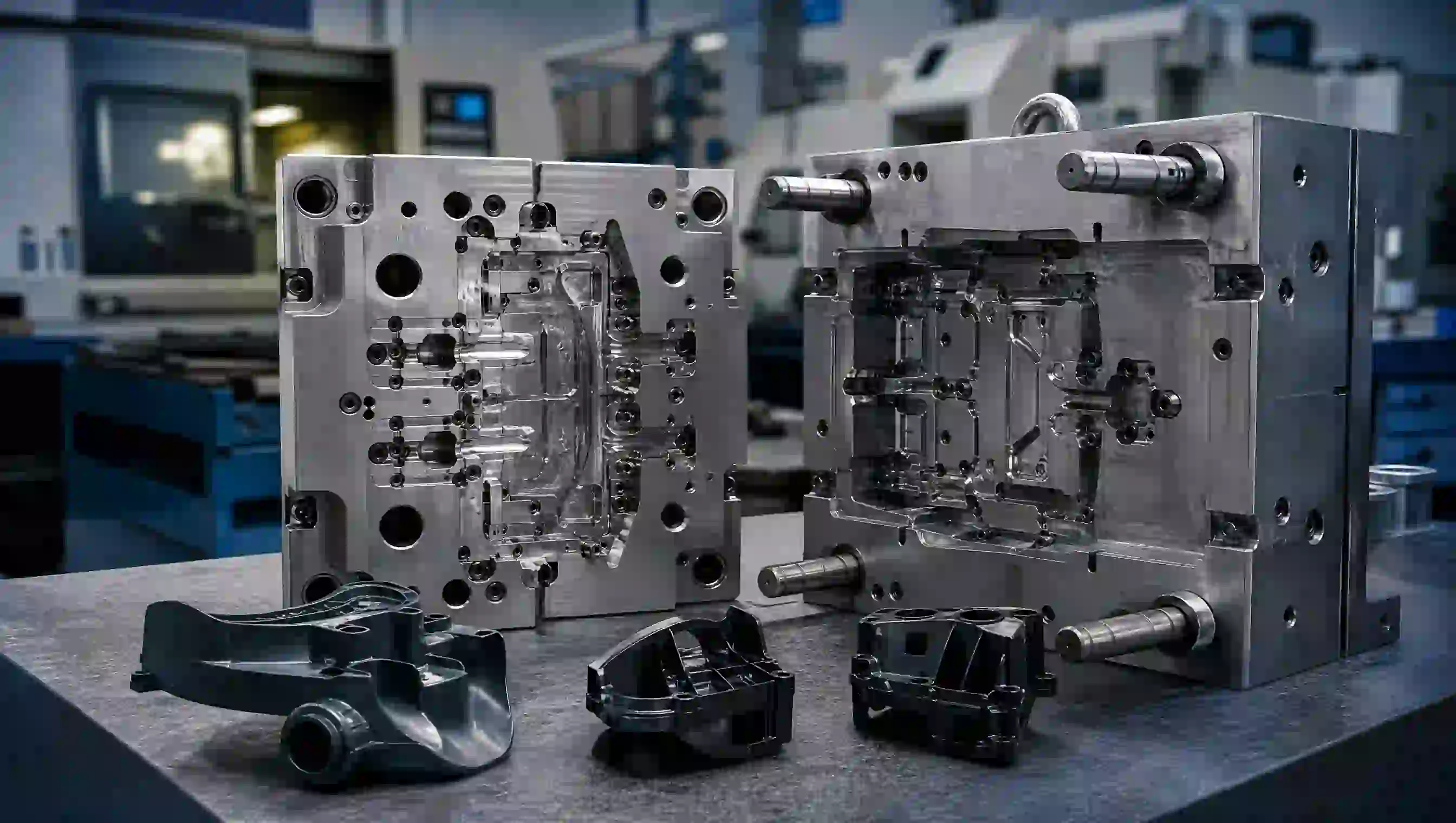
Plastic Mould Design is an engineering plan that is employed to create the steel mold used to mold molten plastic in an injection moulding machine. It provides protection for cavity and core, runner and gate system, ejection, venting and cooling. All of these determine the filling, setting and removal of the plastic from the tool.
With complex geometry, the stakes are raised. Undercuts, thin ribs, deep bosses and snap-fits require side actions, lifters and attention given to the placement of the gate. A well-designed industrial plastic component mould eliminates these features, preventing any air entrapment and stress on the part.
The basic challenge is to repeat a shot, at a cycle time that your production schedule allows. Use of the tool will also be smoother and simpler, ensuring years of uptime, while good design will also make it easier to maintain. Consider the mould as an asset that will be used for a period of time and not just a single investment. Each and every decision from gate position to ejector layout is felt for the life of the tool on the drawing board. This is why good engineers take time to design before accepting any steel for cutting..
Key Technologies Used in Modern Plastic Mould Design
Current manufacturing equipment is based on digital design and precision manufacturing. They combine to reduce trial and error and get Plastic Mould Design Services closer to the right first time results. The two areas below are the foundation for any precision plastic mould build.
CAD/CAM Design and Mould Flow Analysis
All of the 3D models are used to specify the part, the tool layout and all inserts before any steel is cut. Additionally, CAD/CAM mould design is interfaced to the machine shop directly, so design intent is carried through to the shop floor. Then follows mould flow analysis. The melted plastic fills the cavity in this simulation.
It identifies weld lines, air traps, sink marks, warpage problems at an early stage. Gate options and cooling layouts can be compared prior to approval by the engineer. It takes hours to set a screen's gate position. It can take weeks to fix it on hardened steel.
CNC and EDM Machining for Precision Tooling
CNC machining is used to create cavities, cores and plates to exact tolerances. Clean surfaces and correct profiles are achieved by using high speed milling. Where cutters can't go, EDM machining takes over..
It is used to machine hardened steels and create sharp corners, deep ribs and fine textures and precision wire EDM can be used to cut precision inserts and slots. These processes combine to form the complex features a plastic injection mould requires and maintain dimensions throughout repeat builds. Then, the tool is finally fitted and polished.
Important Factors in Designing Complex Plastic Parts
The decisions made at the beginning have an impact on the entire production run. There are some practical issues which determine whether Custom Plastic Mould Design is successful or not. They can be divided into two categories: tool materials and part geometry.
Material Selection and Mould Durability
The type of mould steel you use should match the type of the Jobs and the volume should be the best guide. The following is a comparison of the common choices for plastic mould materials decisions:
- Hardened tool steel is suitable for high volume and abrasive, glass filled resins.
- When considering medium runs and easier machining, pre-hardened steel is suitable.
- Aluminium is used for prototypes and short production runs.
Resin is also important because they all have different properties in the tool, such as ABS, PP, nylon and polycarbonate. Provide your Volume Plan in advance to ensure the custom plastic mould is made for realistic tooling life. Excessive steel specifications are expensive, and insufficient steel specifications result in flash and early wear and expensive repairs.
Tolerances: Wall Thickness and Cooling Design
The first step to achieving tight tolerances is to ensure that the correct shrinkage allowance is used in the resin selected.These are some design points to be considered when designing a mould for industrial plastic parts:-
- Minimize any variation in wall thickness to prevent warpage and sink marks.
- Include draft angles to ensure no drag marks or stress on parts.
- Arrange cooling channels near the cavity for uniform and rapid extraction of the heat.
- Only put in the tolerances that the function requires – the tighter the tolerances, the more expensive the tools will be!
Industrial Applications of Custom Plastic Moulds
There are various sectors that benefit from well designed tooling. There is a need for consistency but the needs vary. An industrial plastic component mould can be used in many applications, such as:
- Automotive parts such as trims, clips, brackets and housings
- Packaging items like caps, closures, crates and containers
- Electrical enclosures, switch housings, connectors and cable accessories.
- Consumer products like appliance bodies, handles and storage items
- Industrial equipment covers, guards, knobs and machine fittings.
The examples here illustrate the variety and no two industries demand the same. Every sector exerts the tool in different ways. Tight fit and heat resistance are key properties for automotive applications. Fast cycles and multiple cavities preferred in packaging. Flame retardant resins and clean insulation features are required for electrical parts. Having the expertise of custom plastic mould manufacturers can assist you to identify the best mould to meet these requirements without paying for the features you would not require.
How to Choose a Plastic Mould Manufacturer in India
Choose the right partner, don't take his word for it as he will save you several months of rework. Before ordering from any Plastic Mould Manufacturer In India, make sure to use these checks:
- Design experience with portions similar in complexity and resin type.
- CAD/CAM, CNC & EDM in-house keeps schedules on track.
- Clear shot weight, cycle time and defect report from sample testing
- Dimensional checks with your drawing etc are inspected.
- A realistic delivery schedule with a series of design approvals, machining and trial dates.
- Post delivery support for tool maintenance, repairs and modifications.
A low price tag can mask some high cost anomalies, such as the use of poor steel or missed delivery dates and repeated trial rounds. A clear and itemised proposal typically identifies the supplier who's planned the job. Seek written documentation of the process, do not accept verbal assurances. If possible, go to the facility and ask for references from other types of facilities. A good plastic mould supplier India buyer will be able to address these questions without any fear or hesitation and provide the trial data as well.
Plastic Mould Design and Manufacturing at Integrated Solutions
Integrated Solutions can assist industrial buyers that can prove their design and custom manufacturing experience as well as their capabilities in CNC and EDM, their mould testing and engineering support services. From your part of the drawing or sample the team produces the tool layout, completes the production of the component, and then tests the plastic mould before sending it to you. Engineering support to maintain production after the tool has been used.
This integrated process ensures that designs, prototyping and testing are all performed in the same building, therefore eliminating the time lag between teams in the feedback loop from the test to the design. That's improved communication and no unpleasant surprises for the buyer.
Explore the custom plastic mould manufacturing in India page to see how the process works for your component. Planning a new tool or reworking an existing one? Show your drawing or sample to Integrated Solutions and speak with them today about the technical discussion surrounding your design.